Page 21 of 24

2014 Annual Meeting of the American Philosophical Association

The annual meeting of the American Philosophical Association concluded this afternoon. This year was a good one for Kierkegaard. The Søren Kierkegaard Society always sponsors a session at the APA meetings, but this year, there was actually a colloquium paper on Kierkegaard as well.  The paper, entitled “Kierkegaard’s Revision of the Aristotelian Virtue of Courage,” was presented by Karl Aho, a graduate student from Baylor as part of a colloquium on Aristotle. The colloquium took place on the 27th, the first evening of the conference. I had only just returned from Denmark, where I’d spent Christmas with friends (and where I’d also attended a talk at the law faculty of the University of Copenhagen which will be the subject of a forthcoming post to my other blog: “The Life of the Mind”), so I missed Aho’s presentation. Fortunately, an abstract of the paper is available on the APA website. I took the liberty of copying it for readers who, like me, were not able to attend the session themselves. “Several authors,” observes Aho,

have proposed that we view Kierkegaard as a virtue theorist. In this paper, I further develop this virtue approach by discussing several Kierkegaardian arguments about the virtue of courage. Against Aristotle’s account of courage, Kierkegaard claims that we ought not limit courage to only those extraordinary individuals who risk their lives to perform noble deeds. Kierkegaard revises the Aristotelian virtue by expanding our understanding of which situations call for courage. By widening the scope of situations that call for courage, Kierkegaard’s understanding of courage enables people to respond courageously in those situations. I conclude by discussing the implications of Kierkegaard’s view of courage for his authorship more broadly construed. Kierkegaard’s understanding of courage can inform our interpretation of pseudonymous texts, like Fear and Trembling and The Sickness Unto Death, in which courage plays a central role.

My own feeling is that Aho is not doing justice to Aristotle here, but that, for Kierkegaard scholars anyway, is less interesting than the positive position Aho develops on Kierkegaard’s own view of courage. The latter appears promising, so it would be nice to see the paper in print soon.

Unfortunately, I do not have access to abstracts of the papers that were presented in the session sponsored by the Søren Kierkegaard Society. I do not want to summarize them for fear I wouldn’t do justice to them. The session was on Kierkegaard and Narrative and the speakers were John Davenport of Fordham, Jeffrey Hanson (whose coiffure is strikingly reminiscent of Kierkegaard’s own) of Australian Catholic University, and Frances Maughan-Brown, of Boston College. The commentator (whose name, for some reason, did not make it into the official program) was Clare Carlisle. The titles of the papers will give readers an idea of the content. Davenport’s paper, “Psychological Narrativity and the Limits of Ethical Self-Authorship,” was a continuation of a dialogue he and Anthony Rudd have been having for some time on the role of narrative in Kierkegaard (see Rudd’s Self, Value and Narrative: A Kierkegaardian Approach and Davenport’s Narrative Identity, Autonomy, and Mortality: From Frankfurt and MacIntyre to Kierkegaard). Hanson’s paper was entitled “Aesthetic Ideals and the Task of Repetition,” and Maughan-Brown’s paper was entitled “Kierkegaard and Allegorical Narrative.”

The discussion after the papers was lively and productive. Davenport has one of the keenest minds among contemporary Kierkegaard scholars, not only were his comments during the discussion interesting, it was amusing to see him launching, on behalf of the other two panelists, even harsher criticisms of his own position than they had launched themselves.

Unfortunately, the discussion was marked by some confusion concerning the nature of Kierkegaard’s concept of repetition. The term was being used by nearly everyone, panelists, audience members, and even the commentator, Carlisle, in what Davenport finally correctly identified as “the profane sense of mere iteration.” Repetition, for Kierkegaard, is a specifically theological concept. Repetition, as the narrator of Kierkegaard’s eponymous novel discovers, is very far from mere iteration, so far, in fact that he concludes it is simply impossible.

Repetition would appear to be one of the most misunderstood of Kierkegaardian concepts. It’s tempting to conclude that this may be due, at least in part, to it’s theological nature. A closer examination of the concept reveals, however, that what one could call the “problem” of repetition, as Kierkegaard articulates it, is not specifically theological. Only the solution is. The problem is that for temporal creatures, or at least for human beings, mere iteration always involves some difference, no matter how minute. Even the kinds of daily tasks that were brought up during the discussion, things such as changing diapers or brushing one’s teeth, are never exactly the same, to say nothing of more complex sorts of events such as trips to favorite vacation destinations. The problem is that of recreating a sameness that temporality, in its essence, would appear to preclude, of capturing and preserving an experience that time wrests from our grasp. This, for Kierkegaard, can be accomplished only through divine intervention. Whether he is right about this should be viewed as a challenge to scholars, yet few seem to understand the concept well enough to take it on.

2013 in review

The WordPress.com stats helper monkeys prepared a 2013 annual report for this blog.

Here’s an excerpt:

The concert hall at the Sydney Opera House holds 2,700 people. This blog was viewed about 11,000 times in 2013. If it were a concert at Sydney Opera House, it would take about 4 sold-out performances for that many people to see it.

Click here to see the complete report.

The Curse?

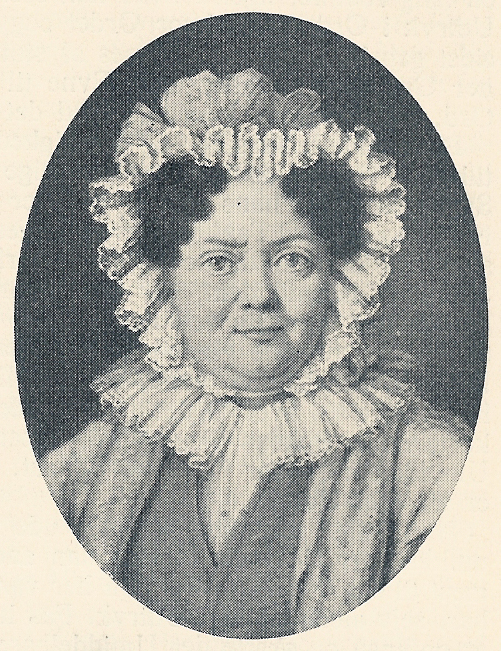
Ane Sørensdatter Lund

Peter Tudvad’s new book The Curse (Politiken, 2013) is a “masterpiece,” according to the reviews in the Danish papers. The Curse is partly fact and partly fiction, but Bo Bjørnvig writes in Weekendavisen that Tudvad, being “the meticulous scholar” he is, sticks as closely to the facts as possible until the very end of the book (Weekendavisen, 19 April 2013).

With the exception of the end, that is, The end is where the fictional elements come in. But why introduce fictional elements? Why not just keep the book a straightforward biography? Tudvad’s answer, according to Karen Syberg’s review in Information, is that “being the ‘archive rat’ that he is, [Tudvad] discovered over time where the sources were silent and hence conceived a desire to transcend the limitations of traditional biographical scholarship by making them speak” (Information, 18 April 2013).

Though the reviewers are unqualified in their praise of the first part of the book, not all are equally happy with the fictional denouement (several were even unprofessional enough to reveal its details in their reviews).

I’m not going to spoil the surprise for those of you whose command of Danish is sufficient to allow you to delve into what by all reports is a book well worth the effort it takes to read. I would like, however, to suggest a direction for future speculations concerning the unrecoverable bits of the Kierkegaard family saga. I always found the details of Kierkegaard’s father’s two marriages mysterious. Michael Kierkegaard married the sister of his business partner of many years, Mads Røyen, when he was 38 and she was 37. Michael Kierkegaard must have known Kirstine Nielsdatter for some time before their betrothal. Yet despite the fact that he had been in a position to marry in the sense that he was a successful businessman of a reasonable age for years, he had not proposed to her.

We know nothing of Michael and Kirstine’s feelings for each other. No love letters, if there were any, survive and neither do any accounts of what their daily life together was like. We know only that the first Mrs. Kierkegaard died of pneumonia after less than two years of marriage. We do know something, however, about the nature of Michael Kierkegaard’s second marriage to Søren Kierkegaard’s mother, Ane Sørensdatter Lund. Their union was to all accounts a happy one. The first Kierkegaard union was childless, but the second produced a brood of seven children over which Ane presided with what acquaintances described as pronounced maternal solicitude.

The second Kierkegaard marriage had a somewhat scandalous beginning, not simply because Ane was pregnant at the time of the wedding, and not even because that pregnancy was clearly the result of a liaison that had taken place within an unacceptably short time after the demise of the first Mrs. Kierkegaard, but also because Michael Kierkegaard had drafted a prenuptial agreement that was so unfair to his future second wife that his lawyer refused to sign it.

The precipitous second marriage of the elder Kierkegaard has traditionally been interpreted as a product of the patriarch’s lechery. There is little evidence of this purported lechery, however, apart from the fact of Ane’s pregnancy. That is, there’s no evidence that Michael Kierkegaard had any extramarital liaisons either before, during, or after either of his two marriages. No claimants to the Kierkegaard fortune were produced by women of apparently easy virtue. That is, the elder Kierkegaard does not appear to have been a man of unbridled lusts.

Ane Sørensdatter Lund was from central Jutland, just as was Michael Kierkegaard and both were from similar rural backgrounds. Hence they had something in common that Michael Kierkegaard did not have with his first wife. Perhaps the Kierkegaard family “curse” played itself out in Michael Kierkegaard’s actually falling in love with a woman who would have been considered an unsuitable mate. Ane was to all accounts no great beauty, but the surviving portrait of her depicts a woman with a vivacious expression and a keen, penetrating gaze. It’s not hard to imagine that Michael could have found her attractive, as indeed, history confirms that he did. And if she wasn’t a great beauty, it’s well known that true love often has little to do with prevailing standards of physical attractiveness.

Perhaps Michael Kierkegaard actually married his first wife partly for her generous dowry, but also in order to be closer to Ane. Ane had been in the employ of Mads Røyen until the elder Kierkegaard’s marriage to Kirstine, at which point she went to work for the new couple. By the time of his marriage, Michael Kierkegaard’s social position had risen to the point that marriage to a servant would have been considered inappropriate. And for the wealthy Kierkegaard to pass over the sister of his business partner in favor of one of the latter’s household servants would likely have been considered a positive affront to the Røyen clan. Michael Kierkegaard, whose business acumen is well documented, would certainly have wanted to avoid flouting social convention in a way that might have had negative financial repercussions. How much easier it would have been to consolidate a business alliance through marriage to Kirstine while at the same time arranging that the real object of his affections would become part of his new household.

Scholars have apparently been put off the scent of such speculations by the horrific prenuptial agreement. Why would the elder Kierkegaard have drawn up such an offensive document? He cannot have been unaware of how it would be received. He cannot have been unaware that to offer such terms to the woman one was about to marry would have been considered completely socially unacceptable. Why would the ordinarily shrewd man have done such a thing? It seems more a theatrical gesture than a serious attempt to craft a legally binding document.

My guess, and I offer this in all seriousness, is that it was done deliberately to conceal the true nature of the coming alliance. The whole thing is too reminiscent of the protestations of young boys that they “hate” the little girls upon whom they secretly harbor crushes. Was Michael Kierkegaard trying to convince himself that he’d been seduced by the to all accounts hitherto innocent Ane? That seems not only singularly unchivalrous, but also at odds with his penchant for psychological self flagellation.

What seems more probable is that he hoped the wording of the notorious document would get out, as indeed it did, and that it would lend support to the view that the elder Kierkegaard had not  married Ane out of love, but had been dragged kicking and screaming to the altar. Again, this is a singularly unchivalrous impression to try to create, but one that is explicable if the point was to conceal a genuine affection that would have had far more negative repercussions if anyone actually suspected it. One sexual indiscretion, after all, would be infinitely more forgivable than marrying a woman one didn’t love because of financial expediency, while at the same time scheming to be with the woman one really did love. And if the former died a short time after the marriage, suspicion would inevitably surface that one may, in fact, have been responsible for the first wife’s precipitous end.

If these speculations are correct, Michael Kierkegaard wouldn’t have had to murder his first wife in order to have been racked with guilt over the circumstances of his marriages and for the stain of that guilt to have spread itself over the otherwise happy Kierkegaard household, as indeed the stain of some sort of guilt clearly did.

Did Kirstine Nielsdatter die of a broken heart after learning of her husband’s affection for another woman (and one of lowly station to boot)? Or did she just die, as people were more wont to do then than now? Who knows. Still, the details of Michael Kierkegaard’s two marriages are strange and the speculations presented above make sense of them in a way that is not too fantastical and that hence does not overstrain credulity. In fact, these speculations seem to me to make more sense of those details than does their face value. It’s surprising, in fact, this face value has been so uncritically accepted by scholars.