Page 22 of 25

2013 in review

The WordPress.com stats helper monkeys prepared a 2013 annual report for this blog.

Here’s an excerpt:

The concert hall at the Sydney Opera House holds 2,700 people. This blog was viewed about 11,000 times in 2013. If it were a concert at Sydney Opera House, it would take about 4 sold-out performances for that many people to see it.

Click here to see the complete report.

The Curse?

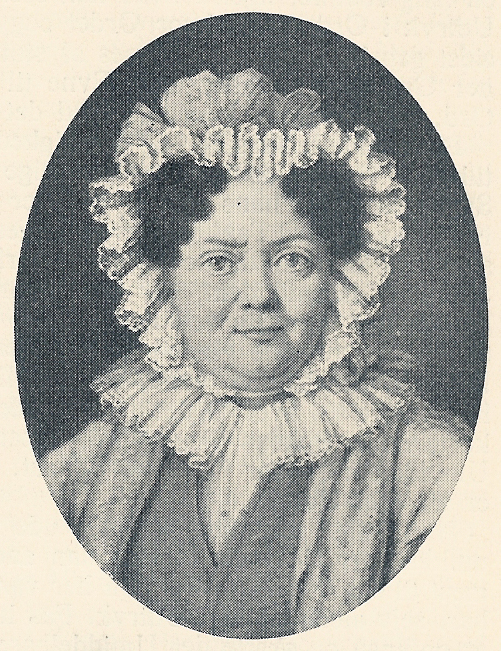
Ane Sørensdatter Lund

Peter Tudvad’s new book The Curse (Politiken, 2013) is a “masterpiece,” according to the reviews in the Danish papers. The Curse is partly fact and partly fiction, but Bo Bjørnvig writes in Weekendavisen that Tudvad, being “the meticulous scholar” he is, sticks as closely to the facts as possible until the very end of the book (Weekendavisen, 19 April 2013).

With the exception of the end, that is, The end is where the fictional elements come in. But why introduce fictional elements? Why not just keep the book a straightforward biography? Tudvad’s answer, according to Karen Syberg’s review in Information, is that “being the ‘archive rat’ that he is, [Tudvad] discovered over time where the sources were silent and hence conceived a desire to transcend the limitations of traditional biographical scholarship by making them speak” (Information, 18 April 2013).

Though the reviewers are unqualified in their praise of the first part of the book, not all are equally happy with the fictional denouement (several were even unprofessional enough to reveal its details in their reviews).

I’m not going to spoil the surprise for those of you whose command of Danish is sufficient to allow you to delve into what by all reports is a book well worth the effort it takes to read. I would like, however, to suggest a direction for future speculations concerning the unrecoverable bits of the Kierkegaard family saga. I always found the details of Kierkegaard’s father’s two marriages mysterious. Michael Kierkegaard married the sister of his business partner of many years, Mads Røyen, when he was 38 and she was 37. Michael Kierkegaard must have known Kirstine Nielsdatter for some time before their betrothal. Yet despite the fact that he had been in a position to marry in the sense that he was a successful businessman of a reasonable age for years, he had not proposed to her.

We know nothing of Michael and Kirstine’s feelings for each other. No love letters, if there were any, survive and neither do any accounts of what their daily life together was like. We know only that the first Mrs. Kierkegaard died of pneumonia after less than two years of marriage. We do know something, however, about the nature of Michael Kierkegaard’s second marriage to Søren Kierkegaard’s mother, Ane Sørensdatter Lund. Their union was to all accounts a happy one. The first Kierkegaard union was childless, but the second produced a brood of seven children over which Ane presided with what acquaintances described as pronounced maternal solicitude.

The second Kierkegaard marriage had a somewhat scandalous beginning, not simply because Ane was pregnant at the time of the wedding, and not even because that pregnancy was clearly the result of a liaison that had taken place within an unacceptably short time after the demise of the first Mrs. Kierkegaard, but also because Michael Kierkegaard had drafted a prenuptial agreement that was so unfair to his future second wife that his lawyer refused to sign it.

The precipitous second marriage of the elder Kierkegaard has traditionally been interpreted as a product of the patriarch’s lechery. There is little evidence of this purported lechery, however, apart from the fact of Ane’s pregnancy. That is, there’s no evidence that Michael Kierkegaard had any extramarital liaisons either before, during, or after either of his two marriages. No claimants to the Kierkegaard fortune were produced by women of apparently easy virtue. That is, the elder Kierkegaard does not appear to have been a man of unbridled lusts.

Ane Sørensdatter Lund was from central Jutland, just as was Michael Kierkegaard and both were from similar rural backgrounds. Hence they had something in common that Michael Kierkegaard did not have with his first wife. Perhaps the Kierkegaard family “curse” played itself out in Michael Kierkegaard’s actually falling in love with a woman who would have been considered an unsuitable mate. Ane was to all accounts no great beauty, but the surviving portrait of her depicts a woman with a vivacious expression and a keen, penetrating gaze. It’s not hard to imagine that Michael could have found her attractive, as indeed, history confirms that he did. And if she wasn’t a great beauty, it’s well known that true love often has little to do with prevailing standards of physical attractiveness.

Perhaps Michael Kierkegaard actually married his first wife partly for her generous dowry, but also in order to be closer to Ane. Ane had been in the employ of Mads Røyen until the elder Kierkegaard’s marriage to Kirstine, at which point she went to work for the new couple. By the time of his marriage, Michael Kierkegaard’s social position had risen to the point that marriage to a servant would have been considered inappropriate. And for the wealthy Kierkegaard to pass over the sister of his business partner in favor of one of the latter’s household servants would likely have been considered a positive affront to the Røyen clan. Michael Kierkegaard, whose business acumen is well documented, would certainly have wanted to avoid flouting social convention in a way that might have had negative financial repercussions. How much easier it would have been to consolidate a business alliance through marriage to Kirstine while at the same time arranging that the real object of his affections would become part of his new household.

Scholars have apparently been put off the scent of such speculations by the horrific prenuptial agreement. Why would the elder Kierkegaard have drawn up such an offensive document? He cannot have been unaware of how it would be received. He cannot have been unaware that to offer such terms to the woman one was about to marry would have been considered completely socially unacceptable. Why would the ordinarily shrewd man have done such a thing? It seems more a theatrical gesture than a serious attempt to craft a legally binding document.

My guess, and I offer this in all seriousness, is that it was done deliberately to conceal the true nature of the coming alliance. The whole thing is too reminiscent of the protestations of young boys that they “hate” the little girls upon whom they secretly harbor crushes. Was Michael Kierkegaard trying to convince himself that he’d been seduced by the to all accounts hitherto innocent Ane? That seems not only singularly unchivalrous, but also at odds with his penchant for psychological self flagellation.

What seems more probable is that he hoped the wording of the notorious document would get out, as indeed it did, and that it would lend support to the view that the elder Kierkegaard had not  married Ane out of love, but had been dragged kicking and screaming to the altar. Again, this is a singularly unchivalrous impression to try to create, but one that is explicable if the point was to conceal a genuine affection that would have had far more negative repercussions if anyone actually suspected it. One sexual indiscretion, after all, would be infinitely more forgivable than marrying a woman one didn’t love because of financial expediency, while at the same time scheming to be with the woman one really did love. And if the former died a short time after the marriage, suspicion would inevitably surface that one may, in fact, have been responsible for the first wife’s precipitous end.

If these speculations are correct, Michael Kierkegaard wouldn’t have had to murder his first wife in order to have been racked with guilt over the circumstances of his marriages and for the stain of that guilt to have spread itself over the otherwise happy Kierkegaard household, as indeed the stain of some sort of guilt clearly did.

Did Kirstine Nielsdatter die of a broken heart after learning of her husband’s affection for another woman (and one of lowly station to boot)? Or did she just die, as people were more wont to do then than now? Who knows. Still, the details of Michael Kierkegaard’s two marriages are strange and the speculations presented above make sense of them in a way that is not too fantastical and that hence does not overstrain credulity. In fact, these speculations seem to me to make more sense of those details than does their face value. It’s surprising, in fact, this face value has been so uncritically accepted by scholars.

C. Stephen Evans wins C.S. Lewis Prize!

Kierkegaard scholar C. Stephen Evans has been awarded the C.S. Lewis Book Prize for his new book for Natural Signs and the Knowledge of God: A New Look at Theistic Arguments (Oxford: Oxford University Press, 2010). The prize, made possible by a generous grant from the John Templeton Foundation, is awarded by the St. Thomas University Philosophy of Religion Project.

The C.S. Lewis Book Prize,” to quote the St. Thomas U. Department of Philosophy web page, “recognizes the best recent book in the philosophy of religion or philosophical theology written for a general audience.”

C. Stephen Evans, for those few of you who do not know, is one of the finest Kierkegaard scholars working today.  Evans, whose Ph.D. is from Yale, is currently University Professor of Philosophy and Humanities at Baylor University and is a past president of the Society of Christian Philosophers and of the Kierkegaard Society of North America.

Evans’ publications extend well beyond the confines of Kierkegaard scholarship. He’s published numerous books and articles on the philosophy of religion and on Kierkegaard and every single one of them is excellent. Among my favorites (though I’ll confess I haven’t read them all) are: Søren Kierkegaard’s Christian Psychology (Zondervan, 1990), Wisdom and Humanness in Psychology (Baker Books, 1989) and Preserving the Person: A Look at the Human Sciences (InterVarsity Press, 1977; Baker Reprint, 1982). His two books on Kierkegaard’s Philosophical Crumbs (or “Fragments” as it was known at the time) and Concluding Unscientific Postscript are far and away the best studies of these works. I’ll not give you the bibliographical info on those books because I want you to go to Evans’ page on the Baylor website to check out his entire bibliography. Anything that is out of print you can probably find on abebooks.com.

One would think that someone so prolific as Evans would have to spend all his time in his study. Nothing could be further from the truth. Every time I write him he replies from some remote corner of the globe where he’s been invited to give a lecture. Far from being a recluse, Evans and his beautiful wife Jan E. Evans, a professor of Spanish (also at Baylor) and scholar of both Unamuno and Kierkegaard, are bons vivants. Fortunate are their dinner companions at the various conferences they attend! (Actually, I’ve long suspected that Evans has an identical twin brother and that one of them is shut away cranking out those books and articles while the other trots the globe giving lectures and learning about the local wines and cheeses.)

No one is more deserving of the C.S. Lewis Prize than C. Stephen Evans. He’s and outstanding scholar and one of the finest human beings I have ever met!

And oh yeah, his new book, God and Moral Obligation, is forthcoming from Oxford University Press.

Congratulations Steve!