Page 12 of 20

New Book on Kierkegaard and Rationality
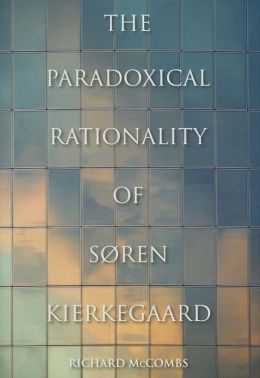
Paradoxical Rationality of Kierkegaard (cover) I received a review a couple of days ago of a new book entitled The Paradoxical Rationality of Søren Kierkegaard. The book is by Richard McCombs. The review, by Antony Aumann, appeared in Notre Dame Philosophical Reviews. I haven’t read the book yet, so I won’t say much about it here. I will share only a few comments on the review. First, Aumann takes McCombs to task for neglecting the secondary literature. I have to say, however, that on my view, that is a fairly minor flaw in a book on this topic. There is some good work on Kierkegaard and rationality (particularly in the volume Kierkegaard after MacIntyre), but there isn’t much that is addressed specifically to this topic. A great deal of what C. Stephen Evans writes touches on the topic of Kierkegaard and rationality, but strangely, Aumann does not fault McCombs for neglecting Evans’ work, but for neglecting, among others, the work of Louis Pojman.

What I would like to see referenced in scholarly treatments of the topic of Kierkegaard and rationality is some German language work. There is simply nothing comparable in comprehensiveness and theoretical rigor to Anton Hügli’s Die Erkenntnis der Subjektivität und die Objektivität des Erkennens bei Søren Kierkegaard (Editio Academica, 1973) and Das Problem des Interesses und die Philosophie Sören Kierkegaards (Karl Alber, 1983). Both these works should be required reading for anyone interested in either Kierkegaard’s epistemology or his position on the nature of human rationality. I quote liberally from both works in Ways of Knowing: Kierkegaard’s Pluralist Epistemology, so you can get some idea of the content of each there. Hopefully, those little tastes will whet your appetite to the extent that you will be willing to struggle through the originals.

Neither, alas, is available as an ebook. Fortunately, McCombs book is available as an ebook. I’ve already downloaded it because I learned from Aumann’s review that the book contains an entire chapter on Kierkegaard’s epistemology. I’m going to get started on the book right away and will post my thoughts on it as soon as I am able to give them coherent form.

In other publishing news, Oxford has come out with a new volume entitled The Oxford Handbook of Kierkegaard. I presume, from the mixed bag of contributors, that it is intended primarily for non-specialists. In typical Oxford fashion, however, at $112 it is priced beyond the means of its intended audience. Scholars will occasionally pay approximately $100 for a book, but non-specialists rarely will. I fear this volume is destined to languish unread on library shelves. That need not have been the case in that Oxford has thoughtfully made it available in a Kindle edition. Unfortunately, they have thoughtlessly priced even that edition out of the reach of nearly everyone but libraries. Most ebooks are substantially cheaper than their physical counterparts for obvious reasons. The Kindle edition of this book, however, is $85. One can only hope Oxford will soon see the error of its ways and reduce that price.

Speaking of how much scholars will pay for books, I have a funny story to relate. I used to order books occasionally from the German book import store in Copenhagen when I lived there. I had heard the theologian Joachim Ringleben speak at some conference or other and had been very impressed by him, so I ordered his book Aneignung: Die Spekulativ Theologie Sören Kierkegaards. When I went to pick up the book, however, the man to whom I was to give my money, opened the inside cover to learn the price and simply burst out laughing. He laughed so hard it was some time before he could calm down sufficiently to process the sale. Even then he kept shaking his head and smiling.

Fortunately, the Kindle version of McCombs book is only $24.49. Thank you Indiana University Press!

Kierkegaard: A Christian Thinker for Our Time

Anthony Rudd
Anthony Rudd

This has been a busy year for Kierkegaard scholars. It’s the bicentennial of Kierkegaard’s birth, so there have been a number of important Kierkegaard conferences. The most interesting one by far, I believe, was the one held at Baylor University from October 31st through November 2nd. The conference, which was part of the ongoing series “Baylor Symposia on Faith and Culture,” was entitled “Kierkegaard: A Christian Thinker for Our Time.”

Lots of conferences purport to address the issue of the relevance of Kierkegaard to contemporary life, but few deliver on that promise. This one did. There were over 400 attendees for the three day event and the topics ranged from “American Religion,” and “Kierkegaard as a Profit to the Church Today,” to “Some Contributions of Kierkegaard to Medical and Psychiatric Practice.” As with so many conferences, there was an embarrassment of riches in the form of many concurrent sessions each with a theme so interesting that it was very difficult to choose from among them.

There’s no way I could summarize all the papers I heard, let alone all the papers presented at the conference, so I’m going to give only a few highlights and direct interested readers to the website for the conference for more complete information.

The highlights for me on the first day were the presentations by Jan and Steve Evans. Jan Evans is a professor of Spanish at Baylor who specializes in the work of Miguel de Unamuno. Unfortunately, I know very little about Unamuno. Fortunately, Evans’ paper gave me a little insight into the respects in which Unamuno was influenced by Kierkegaard. I’m not going to take up space here discussing that issue, however, because Evans has a new book out on that very topic, entitled Miguel de Unamuno’s Quest for Faith: A Kierkegaardian Understanding of Unamuno’s Struggle to Believe (Wipf & Stock, 2013) so if you are interested you should check it out. You can even get it in a Kindle edition!

C. Stephen Evans is one of the most important Kierkegaard scholars working today and an absolutely mesmerizing speaker. I knew his talk, “Kierkegaard on Natural Theology: Why We Can know There Is a God Without Proofs,” would be good, but I was concerned that I might have difficulty following it since it was in the evening. I find it really challenging to listen to more than a couple of presentations in one day. I like to think that it’s because I become so mentally preoccupied with issues raised in those papers that it becomes hard for me to concentrate on new material, but it could well be that I just can’t process that much information in so short a time.

I needn’t have worried, though, that I would have difficulty following Evans’ paper. It was absolutely absorbing in terms of substance and was delivered in such an animated and apparently spontaneous manner that it was as if Steve were holding forth in one’s living room after a particularly pleasant meal. The time flew by.

I understand that there will be a volume of selected papers from this conference. This is going to be a must-buy for every Kierkegaard scholar, not simply because of the enormous variety of wonderful material it will contain, but also because the fact that Kierkegaard believed we could know there was a God is still not widely appreciated by Kierkegaard scholars and this is a serious obstacle to progress in the field. I’m going to return to this issue, in fact, in my second post on this conference where I will examine in some detail one of the papers delivered in a session on Saturday entitled “Kierkegaardian Challenges to Epistemology.”

The highlights for me on Friday were a panel discussion in the morning entitled “Kierkegaard as a Prophet to the Church Today,” and Anthony Rudd’s “Featured Presentation” in the afternoon entitled “Kierkegaard’s Christian Platonism.”

The first session was a panel discussion of Kyle Roberts’ book Emerging Prophet: Kierkegaard and the Postmodern People of God (Wipf & Stock, 2013) (also available in a Kindle edition). Roberts is an associate professor of systematic theology at Bethel Seminary in St. Paul Minnesota and his book is, as one may have gathered from the title, about the significance of Kierkegaard for the contemporary religious phenomenon that is generally referred to as “emergent Christianity.” Roberts confesses in the preface to the book that he is “neither an emerging church leader nor a recognized emergent theologian.” He is deeply sympathetic he explains, however, to the movement and has gotten a great deal of exposure to it through observing the gatherings at an emergent church in Minneapolis known as Solomon’s Porch. The book, he explains, is his “attempt to bring Kierkegaard’s religious thought into dialogue with postmodern expressions of Christianity (i.e., the emergent, or emerging church).”

I was sorely tempted to attend the session on Kierkegaard’s contribution to medical and psychiatric practice because I am very interested in the philosophy of psychology and psychotherapy. Unfortunately, that session ran at the same time as Anthony Rudd’s presentation “Kierkegaard’s Christian Platonism.” Anthony is a dear friend and Plato one of my favorite philosophers, so I couldn’t really pass on that session. I had read an early version of a paper Rudd had done on Kierkegaard and Plato and found it fascinating. I think Plato had a much greater influence on Kierkegaard’s thought than is generally appreciated. Rudd is beginning what I hope will be an avalanche of work on this topic and not only did I want to support my friend, I wanted to get in on the ground floor of this new direction in Kierkegaard scholarship.

Rudd’s presentation was outstanding and generated a very lively discussion afterward because a couple of people in the audience thought Rudd had given short shrift to the distinction Kierkegaard occasionally makes between Plato and Socrates. Since Rudd was a “featured speaker,” his presentation will very likely be part of the volume that will come out of this conference so readers will be able to judge for themselves whether they think this was a weakness in Rudd’s argument. I don’t think it was. I think Rudd’s position was not just convincing but really exciting in that it is certain to generate much more work on this hitherto neglected but clearly very important topic.

I will say more about the conference in a later post.

Clarification of an Ambiguity in Philosophical Crumbs

One of the highlights, for me, of the recent conference on Kierkegaard at Johns Hopkins University, was meeting Jonathan Lear. Lear is a distinguished professor in the Committee on Social Thought and in the Department of Philosophy at the University of Chicago. He is also a practicing psychoanalyst. I have an interest in psychoanalysis and, in fact, am a member of the Philadelphia Jung Seminar. It is a rare treat to meet such a distinguished philosopher who is interested in Kierkegaard, and a rarer one still to meet a philosopher who is a practicing psychoanalyst!

I discovered, in conversation with Lear, that he is teaching a course this fall on Kierkegaard and that he is using my translation of Kierkegaard’s Philosophical Crumbs He wrote to me recently with a question about the text to which I did not immediately have an answer. “On p. 108 of your text,” he wrote, “Climacus says, ‘(This is the untruth of paganism.)’  I don’t think I understand.  Do you have any words of wisdom on that claim?”

The question about this passage from Crumbs is a good one, so I thought I would share my answer to Lear with readers of this blog. I wasn’t sure myself what that parenthetical comment meant, so I went to the online version of the collected works of Kierkegaard in Danish to check my translation against the original text and I discovered that I had, in fact, left something out. There is a word in the original Danish that does not appear in the translation, but which really ought to be there. I don’t know how I failed to include it, but I did. Here is the Danish text followed by my translation with the missing word inserted

Enhver anden Aabenbarelse var for Kjærligheden et Bedrag, fordi den enten først maatte have foretaget en Forandring med den Lærende (men Kjærligheden forandrer ikke den Elskede, men forandrer sig selv) og skjult for ham, at dette var fornødent, eller letsindigt være forblevet uvidende om, at hele Forstaaelsen var en Skuffelse (Dette er Hedenskabets Usandhed).

Any other revelation would, for love, be a deception, because it would either first have had to undertake a transformation of the learner and hidden from him that this had been necessary (but love does not alter the beloved, rather it alters itself), or it would have had to allow him to remain blissfully [letsindigt] ignorant of the fact that the whole understanding had been an illusion. (That is the untruth of paganism.)

“Paganism,” for Kierkegaard (and I believe many of his contemporaries) is a synonym for the Greeks. Kierkegaard often speaks of the Greeks (i.e., the ancient Greeks) as “lighthearted” because they do not have a concept of sin. Sin, according to Kierkegaard/Climacus is what separates human beings from God. SIN is the difference, the main difference. But the Greeks, of course, because they did not have the concept of sin, did not understand that there was an obstacle to their coming to understand the eternal, unchanging truth. They assumed they could just think themselves into it.  They thought they could “understand” the truth, but really, according to Kierkegaard, their understanding was an illusion (“untruth”).

I think that’s what Kierkegaard means in that passage. It’s possible, I suppose, to get that meaning even without the inclusion of “letsindigt/blissfully,” but I think it is harder, so I am grateful to Lear for his question and will add the missing word to the list of corrections I’m planning to send to Oxford.