Ad Fontes: Kierkegaard and MacDonald on “Original Christianity”
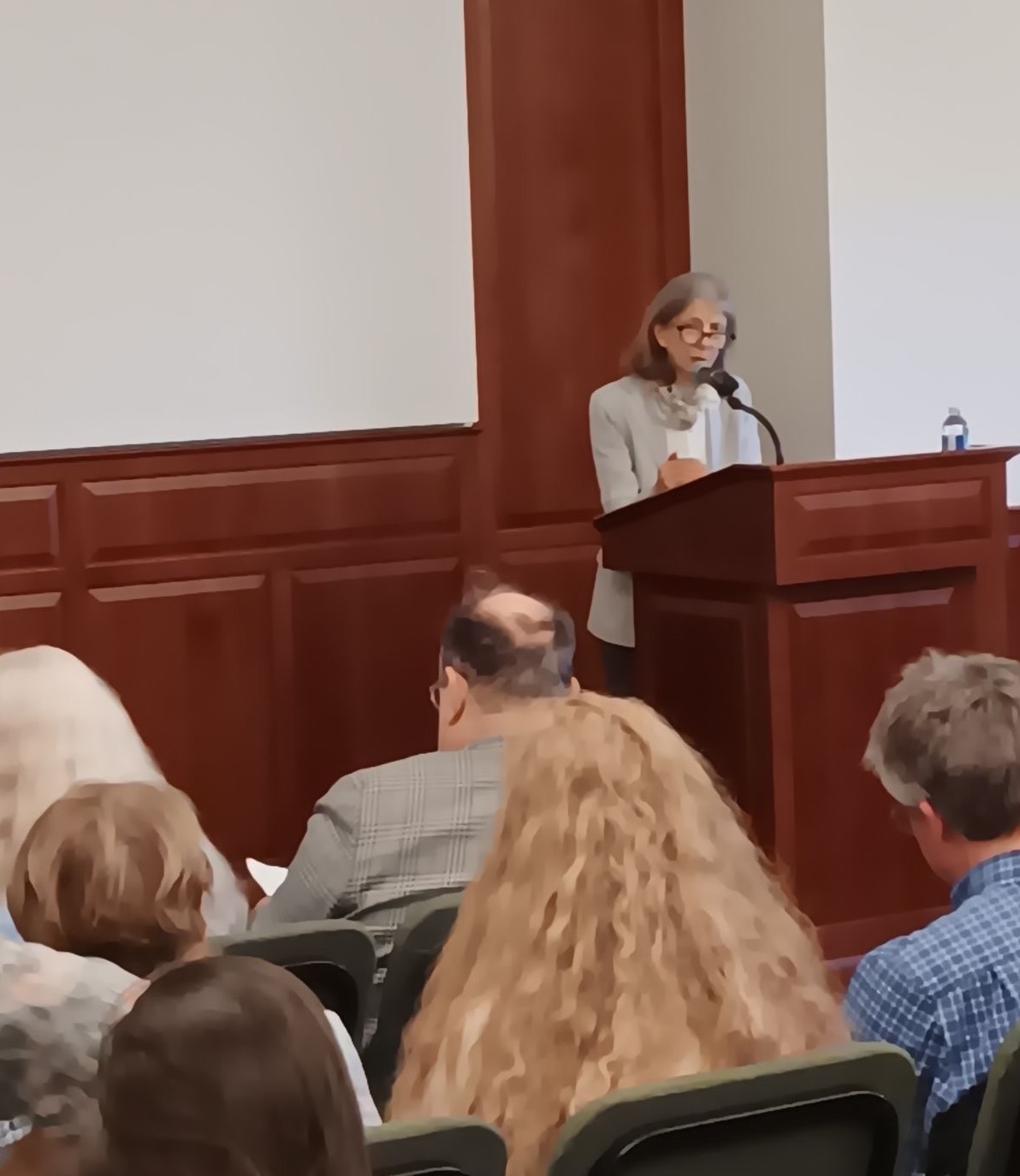
This year is the bicentenary of the birth of George MacDonald. There were a number of conferences held to celebrate this auspicious event. I was fortunate to be able to attend two of them. I wrote earlier about the first conference that took place at Wheaton College last summer. This post is about a conference that took place at Yale University on the 13th and 14th of December.
I discovered by accident that Yale’s Beinecke Rare Book and Manuscript Library has the largest collection of MacDonal materials of any library in the world. That knowledge encouraged in me the hope that Yale might be willing to host a conference on MacDonald, so I “cold-called” several members of the faculty at Yale to see if there was any possibility that my hope might be realized. I didn’t have to wait long, David Mahan, of Yale’s Institute of Sacred Music responded almost immediately that the ISM could provide us with a venu. He couldn’t promise any financial support, however, so I turned to Drexel in the hope that they might be willing to provide the money we needed. They did!
Drexel, or more specifically, David Brown, dean of Drexel’s College of Arts and Sciences, and former Drexel President John Fry, very generously agreed to cover all the costs associated with the conference. That promise was absolutely crucial in making the conference the success that it was because quite a few of the speakers could not count on institutional support to cover their costs. I will forever be indebted to Drexel for their generosity in what are hard times for pretty much every institution of higher education.
The conference was absolutely wonderful. We were treated to a tour of some of the MacDonald materials in the library, and encouraged to apply for the numerous fellowships the library has to support scholars doing research on their collections. There was a truly impressive list of presenters, as well, including Malcolm Guite and Kirstin Jeffrey Johnson, president and co-chair respectively of the George MacDonald Society, Julie Canlis, Kerry Magrudder, Trevor Hart, and many more. A full list of speakers can be found on the program.
As I’ve mentioned before on this blog, there are lots of similarities between Kierkegaard’s and MacDonald’s thought. Mine was the only paper, however, comparing the two. There is talk of all the papers presented in celebration of MacDonald’s bicentenary being published, so I won’t give you the whole paper here. The paper, “Ad Fontes: Kierkegaard and MacDonald on ‘Original Christianity,’” argues that “Kierkegaard and MacDonald share a reverence for the original Christian texts and a healthy skepticism for the official Christian tradition and its tendency to lapse into dogmatism and authoritarianism, that was unusual both for their own time and for ours and that this reverence and skepticism reveals a deep affinity in their thought concerning the true message of Christianity and the nature of Christian life.” Both Kierkegaard and MacDonald, I observe in the paper, had extensive knowledge of ancient Greek and used this knowledge to correct what they felt to be errors in the interpretation of the Christian message. Again, I’m not going to present my entire argument here. I will, however, give you a little taste of the nature of my argument. The paper begins…
“Ad fontes, or “to the sources,” was one of the rallying cries of the Protestant Reformation. It appears in Psalm 41 of the Latin Vulgate (Psalm 42 in most other versions), which reads “As the hart panteth after the water brooks,(desiderat cervus ad fontes aquarum) so panteth my soul after thee, O God.”
The sources, or fonts, as we say in English, of Christian faith are first and foremost the earliest Christian writings, and to access these requires considerable knowledge of ancient Greek. It is not merely the earliest manuscripts of the New Testament that were written in Greek, but also the works of the earliest of the Church Fathers.”
The paper gives a number of example where both Kierkegaard and MacDonald use their knowledge of ancient Greek to defend their own interpretations of the true message of Christianity. The paper, as a whole, is yet another argument in support of the view that Kierkegaard, like MacDonald, was a universalist, and while I didn’t have the space to develop the argument in the detail I would like, I think I made a fairly convincing case, drawing not merely on texts from the works of both thinkers but also on the impressive scholarship of Ilaria Ramelli and David Konstan, whose co-authored book Terms for Eternity: Aiônios and Aïdios in Classical and Christian Texts makes a very compelling argument that there are few if any references to eternal damnation anywhere in the New Testament. This fact has been obscured by church history which, from the period of at least Augustine onward, has arguably systematically misinterpreted the meanings of these terms. Scholars well-versed in ancient Greek, however, as both Kierkegaard and MacDonald were, would certainly have been aware of the paucity of references to eternal damnation in the New Testament as well as of the fact that the church appears to have labored mightily to obscure this. This fact could actually be one of the reasons that both thinkers exhibit such a healthy skepticism for the authority of various thinkers throughout church history. Interesting, eh?
The Yale MacDonald conference was such a success, that we are hoping to be able to make it a regular event every two, or perhaps three years. So there is time for you Kierkegaard scholars to familiarize yourself with MacDonald’s thought before the next conference!
 Piety on Kierkegaard