Translation Recommendations
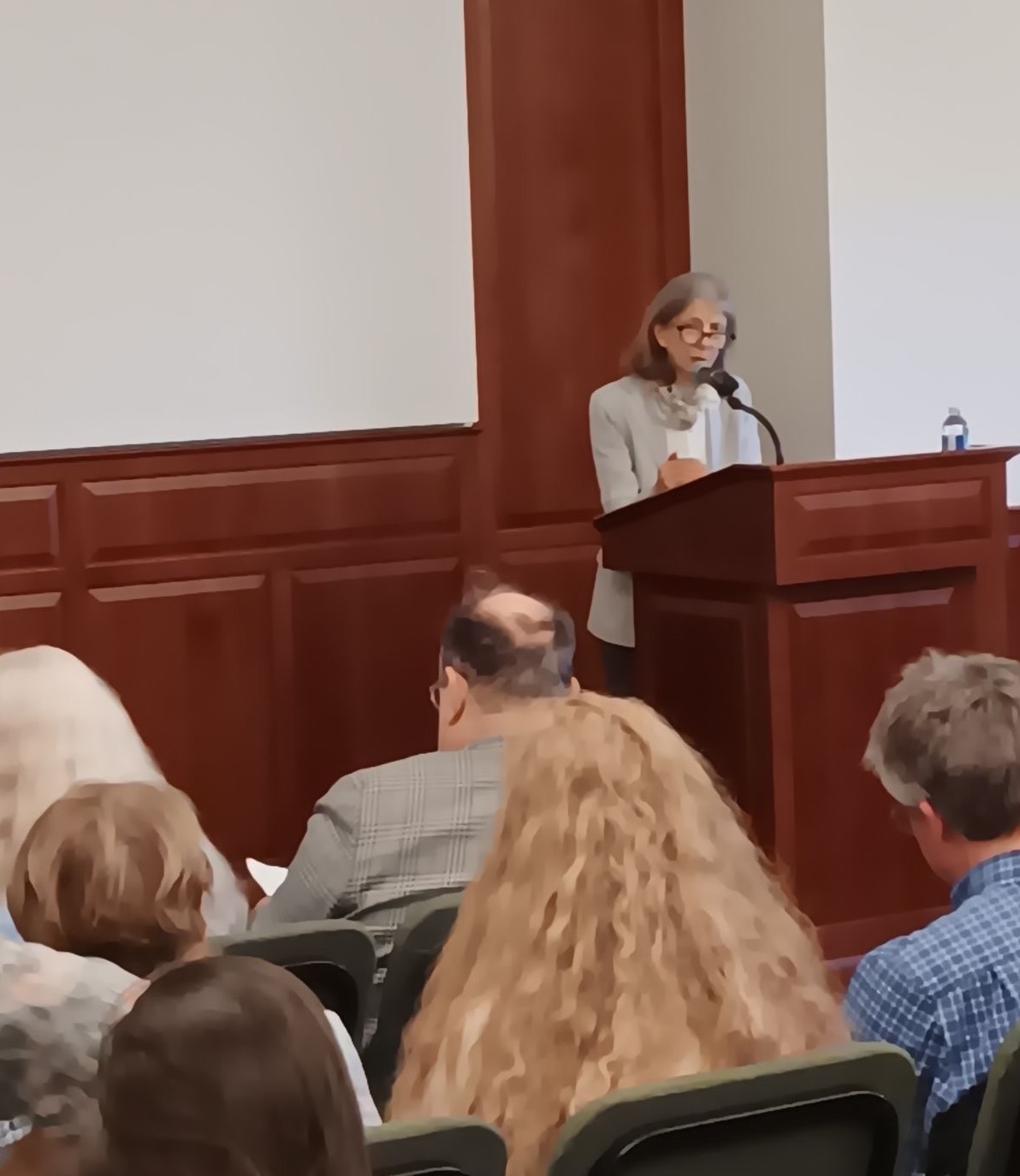
image000002

I have just returned from a wonderful conference at Wheaton College on the thought of George MacDonald (photo at left, courtesy of Ben White). I’ve mentioned in earlier posts how close MacDonald’s thinking is in many respects to Kierkegaard’s. Despite this, however, his thought seems virtually unknown to Kierkegaard scholars, so I was pleasantly surprised to see that mine was not the only paper on MacDonald and Kierkegaard, Mark Lama presented a paper entitled “Hearing the Raven Croak: Lilith, Kierkegaard, & Selfhood.” I enjoyed the paper very much, though I’d have enjoyed it more, I’m sure, if I had read MacDonald’s novel, Lilith.

Lama’s paper led me to the discovery of yet another problem with the Hongs’ translation of The Sickness Unto Death. Lama quoted from Hannay’s translation of that work for Penguin. Hannay has: 

This then is the formula which describes the state of the self when despair is completely eradicated: in relating to itself and in wanting to be itself, the self is grounded transparently in the power that established it. (p. 48).

Where the Hongs have:

The formula that describes the state of the self when despair is completely rooted out is this: in relating to itself to itself and in willing to be itself, the self rests transparently in the power that established it. (p. 14).

The Danish, however, is:

Dette er nemlig Formelen, som beskriver Selvets Tilstand, naar Fortvivlelsen ganske er udryddet: i at forholde sig til sig selv, og i at ville være sig selv grunder Selvet gjennemsigtigt i den Magt, som satte det (SKS 11, 130).

I actually preferred the Hong’s “rests” from a stylistic point of view. Unfortunately, I have to confess that Hannay’s “grounded” is better, given that the Danish in question is “grunder” and not “hviler.” My guess is that Kierkegaard chose the former because it fit better the somewhat scholarly tone of the book.

I shouldn’t be surprised that Hannay’s translation is, in this instance, superior to the Hongs’ Hannay’s translations (with the exception of his translation of the Postscript) are generally superior to the Hongs’ 

I was discussing this recently with Andrew Davison, until recently Professor of Theology and Natural Sciences, at the University of Cambridge (and sometime priest at S. Clement’s here in Philadelphia) and now Canon and Regius Professor of Divinity at Christ Church, Oxford. Davison suggested that I should do a blog post where I identified which of the many English translations of Kierkegaard I thought were the best. I do sometimes get emails from people who want me to recommend translations for them, so it seems like a blog post that does that would be a good idea. Take these recommendations with a grain of salt, though, because I have not sat down and made studious comparisons of all the English translations of Kierkegaard. And remember, no translation can serve as a foundation for serious scholarship. 

In general, I would say that the best translations of Kierkegaard are the older ones done by David Swenson and Walter Lowrie. They are still widely available in used bookstores and on abebooks.com. Alastair Hannay’s translations for Penguin are also very good. Under no circumstances, however, should you the translation of the Postcript that Hannay did for Princeton. Something went horribly wrong with that translation as I detailed in earlier posts on this blog. There are assorted other translations, George Pattison has a couple, I believe, as does Bruce Kirmmse. But while Kirmmse has an excellent knowledge of Danish, neither Pattison nor Kirmmse is a writer of sufficient eloquence, I believe, to do Kierkegaard’s prose justice. 

I have a handful of translations by other people that I have not yet read. Among those are Stephen Crites’ translation Crisis in the Life of an Actress, and other essays on drama (Harper Torchbook, 1967), A.S. Aldworth and W.S. Ferrie’s translation Consider the Lilies (London: C.W. Daniel Company, Ltd, 1940), Alexander Dru’s The Journals of Kierkegaard (Harper Torchbook, 1958), and The Present Age and Of the Difference Between a Genius and an Apostle (Harper Torchbook, 1962), and an intriguing The Diary of Søren Kierkegaard, translated by Gerda M.Andersen, and edited by Peter P. Rohde.

I will check out these translations and let you know what I think of them in later posts.

The Responsibility of Intellectuals, or The Reception, in Denmark, of Tudvad’s Book on Kierkegaard and the Jews

One of the funniest, and yet also saddest, pieces by Kierkegaard is on book reviewers. “The appearance of a book,” he writes in Prefaces (Forord in Danish), “is…an event that promptly sets the reading public in motion. Ordinarily there is an individual who even knows it somewhat in advance. … Such a person is fortune’s child, … welcome everywhere. [He] knows only something ambiguous about the title of the book and what it deals with, but this is precisely what is most endearing about him in the eyes of the reading public, because a rumor carries away the reading public as the muse’s impulse the poet.”

The piece goes on about how reviewers will pronounce judgment on works without even having read them.

I don’t know how most contemporary readers react to this diatribe against book reviewers. I know that when I read it, however, I assumed it was a phenomenon that was more or less restricted to 19th-century Copenhagen. I don’t mean to give the impression that I was incorrigibly naïve. I assumed there were still a few irresponsible book reviewers out there. I just took them to be the exception rather than the rule.

I fear now, however, that I may have been wrong. I haven’t actually counted how many reviews were published of Peter Tudvad’s new book, Stadier på Antisemitismens Vej: Søren Kierkegaard og Jøderne (Stages on the Way of Anti-Semitism: Søren Kierkegaard and the Jews), before the book actually came out. The number is sort of overwhelming. This was probably a result, at least in part, of the fact that there appears to have been a “krisemøde på teologi” (damage-control meeting of theologians) as soon as word got out that the book was on its way. The objective, it seems, was to find a way to inoculate Kierkegaard against the contagion of the charge that he was anti-Semitic by discrediting the argument of Tudvad’s book before anyone could actually read it. This, for those readers who do not immediately recognize it as such, is the fallacy known as “poisoning the well.”

The book did not come out until the 9th of November, yet the English theologian George Pattison wrote an article for the Nov. 3rd issue of Kristeligt Dagblad, “Søren Kierkegaard var hverken bedre ell værre end sin tid” (Søren Kierkegaard was neither better nor worse than his times [translated into Danish by Sara Høyrup]), in which he said that “anti-Semitism, in the modern sense, cannot be separated from 19th-century theories of race that are connected with a particular reading of Darwin” and that it is thus “inappropriate and anachronistic to connect the concept of anti-Semitism with Kierkegaard.” This statement, unfortunately, compounds the fallacy of “poisoning the well” with that of “equivocation” in that the first reference is to “anti-Semitism” in the “modern sense” whereas the second is not qualified in this way but is clearly to anti-Semitism in a more general sense. It’s obvious that Kierkegaard cannot be charged with anti-Semitism in the modern sense. No one who lived before Darwin could be charged with anti-Semitism in the modern sense. That does not mean, however, that there was no anti-Semitism before Darwin. Nor does it mean that Kierkegaard could not have been anti-Semitic, or that inquiry into this topic is somehow out of bounds. Pattison must either be shockingly ignorant of world history, prone to committing logical fallacies, or disingenuous.

These are very anti-intellectual times. Academics are under siege. We are constantly criticized and charged, for example, with being lazy and intolerant of views that depart from our own. Dismissing a book before one has even read it only adds fuel to the flames of such criticism. It looks as if many people are simply unwilling to accept that Kierkegaard could have been antisemitic, so they feel no compulsion to examine the evidence to that effect before dismissing the claim. It is precisely such behavior that has brought academics into ill repute. It behooves those of us who like to think of ourselves as intellectuals to do our homework before making public pronouncements on the works of our fellow intellectuals.

I’ll say more about the reception of Tudvad’s book later, after I have said a little more about the content.

Once Upon a Time in Denmark…

Once upon a time, or to be more precise, back in 1996, when I was still living in Denmark, the English novelist David Lodge gave a lecture on Kierkegaard in Copenhagen. This event, if my memory serves me correctly, was part of the festivities connected with Copenhagen’s status as the official “Culture Capital of Europe” for that year. Lodge’s book Therapy, where both Kierkegaard and Copenhagen figure prominently, had come out the year before.

I don’t remember much about Lodge’s talk except that it was well attended and that Lodge bore a striking resemblance to Roy Orbison.

Both Anthony Rudd and I gave papers that summer at a conference entitled “The Brain and Self” in Elsinore. The conference appeared to have been geared primarily toward people in the medical profession, so the registration was expensive. One of my close friends in Copenhagen (who shall remain nameless for reasons that will become clear below), wanted to attend the conference but couldn’t afford the cost of the registration. He decided, therefore, to crash the conference by forging a name badge.

This, as you can understand, made me extremely uncomfortable. I implored my friend to at least keep a low profile. We were required to introduce ourselves and to mention our institutional affiliation before asking a question of any of the speakers. It was thus important, I explained to him, that he not ask any questions. One of the conference organizers appeared, in fact, to be carrying around a list of the officially registered participants and to be checking the names of attendees against the list. Of course my friend ignored me, to both my consternation and that of the organizer who scanned his list with increasingly obvious anxiety every time my friend stood and held forth on what he perceived to be a problem with the speaker’s position.

Anthony, who is one of the most ethical people I know, was none too happy with this situation either. Tensions in our little group were thus running high when my friend came to us with the revelation that he had seen David Lodge among the conference participants. David Lodge speaking on Kierkegaard was one thing, but David Lodge at a medical conference was something else. Had he seen Elvis too? We had a great deal of fun teasing our friend about his “visions.” We were forced to apologize, however, when, toward the end of the conference, Lodge did indeed appear as speaker. The most memorable thing about Lodge’s second public appearance in Denmark within the space of a year was that he appeared to be reading his presentation. That is, he was looking down at his papers so the moderator could not get his attention and, after repeated attempts to indicate discretely that he was going overtime, began to march back and forth in front of him, dipping and weaving, in vain attempts to attract Lodge’s attention to the sign he had made that must have said something like “Stop!”

This spectacle was so amusing, that it went a long way toward helping Anthony and me get over the guilt we felt at having failed to believe our friend.

I have since then been in the position myself of having to indicate to speakers when they were going overtime. If after the standard “5” “3” “1” “0” warnings, the speaker is still going strong, I’ve found that a quickly sketched scull and crossbones usually does the trick.