Page 31 of 51

Once Upon a Time in Denmark

j9987For as long as I can remember I’ve had what Kierkegaard would call “an extraordinary hankering” to get into The New York Review of Books. In fact, my entire literary and scholarly production: my translation, my book, my many articles and two blogs, has been one long and elaborate attempt to attract the attentions of Robert Silvers, the editor of the Review, in the hope that my work would so impress him that he would decide to add me to his stable of reviewers. So when I saw that Princeton University Press had released a new edition of Kierkegaard’s The Seducer’s Diary with a foreword by John Updike, I was immediately reminded of the one time I did actually make it into the NYRB–sort of.

I’ve been an avid reader of the NYRB since I was a child. My father, who was an editorial writer for a newspaper, used to get it at work and bring it home for me to read. I loved the NYRB. The articles were always so interesting and so well written. I would read nearly the whole thing, cover to cover.

Naturally, I tried to keep up with it even during the years lived in Denmark. I don’t remember whether I subscribed to it then, or whether I simply collected my father’s old copies on my occasional trips to the U.S. Somehow though, I kept up with it, despite the fact that it was nearly impossible to find a copy on a newsstand in Denmark (a detail that will be important later in this story).

I was pleased, one day in 1997, to see an article by Updike on “The Seducer’s Diary” portion of Kierkegaard’s Either-Or in the May 29, edition of the Review. Updike is a wonderful writer, so I knew the piece would be good.

I was disappointed, however, to see Updike cite the apocryphal story that Kierkegaard had once visited a brothel as if it were well-documented historical fact. Most Kierkegaard scholars know that the story is pure speculation, but almost no one knows how the speculations got started. That is, no one except my then boyfriend Paul A. Bauer who, though I don’t think he had read any Kierkegaard when I met him, had spent the seven years we’d been living together in Denmark acquainting himself with the more arcane facts surrounding Kierkegaard’s life and writings.

“God I wish I knew how that story got started,” I complained to Paul.

“I’ll tell you how it got started,” he answered placidly. “P.A. Heiberg started it. [Heiberg was one of the editors of the first edition of Kierkegaard’s collected works.] Heiberg decided,” Paul continued, “that Kierkegaard’s account in the book Stages on Life’s Way of a man who visits a prostitute and becomes obsessed with the idea that he might thus have fathered a child was autobiographical. He didn’t have any real evidence to support this theory though,” Paul explained. “All he had in the way of ‘support’ was a few drafts of that passage from Stages and the fact that there was a gap in Kierkegaard’s journals of about six to seven weeks from the end of April until the beginning of June in 1836. Heiberg figured the brothel visit had occurred around the beginning of that period and that it has so traumatized Kierkegaard that he couldn’t write again for weeks.”

Paul knew this because among the arcana that made up his growing library was a monograph by Heiberg entitled En Episode i Kierkegaards Ungdomsliv (an episode in Kierkegaard’s youth) from 1912 and a book entitled Et Segment af Søren Kierkegaards religiøse Udvikling (a segment of Kierkegaard’s religious development) from 1918 where Heiberg presented these speculations, and Paul, unlike probably anyone else alive today, had actually read both these works.

Ecstatic at the realization that I was more knowledgeable about something than was John Updike (well, okay, Paul was the one who was really more knowledgeable), and that maybe I could leverage this knowledge to get into the NYRB, I suggested we write a letter to the Review pointing out Updike’s error in presenting mere speculation as fact.

We drafted the letter and sent it off directly to the NYRB. I assumed we’d be notified if they decided to print the letter, which I was initially confident they would, since revealing as it did for the first time in modern memory, the source of this famous story about Kierkegaard, it promised to create something of a stir in scholarly circles.

Weeks passed.  The whole thing had faded from my memory when my eyes unexpectedly lit upon my own name in a sort of “Heard About Town”column entitled “Dyt-båt” (that’s supposedly the sound of an old Model-T horn) in the Danish newspaper Weekendavisen.

“Two University of Copenhagen students really took it to John Updike in the most recent edition of The New York Review of Books” the column blared.

I leapt right out of my chair.

“We’ve got to get a copy of The New York Review of Books!” I exclaimed to Paul.

I can’t remember now how long it took us to find a copy. I do remember, though, that we combed almost the entire city looking for one. When we finally found one, we went immediately to the “Letters” section at the back. There it was, our letter in all its lengthy erudition. My joy at this triumph was somewhat short lived, however, because following our letter was a disappointingly curt reply from Updike, who appeared to think that our objection to the brothel-visit story had been motivated by some kind of prudishness.

So there you have it. That is the story of how my longtime ambition to appear in the pages of The New York Review of Books was finally realized–sort of.
The Curse?

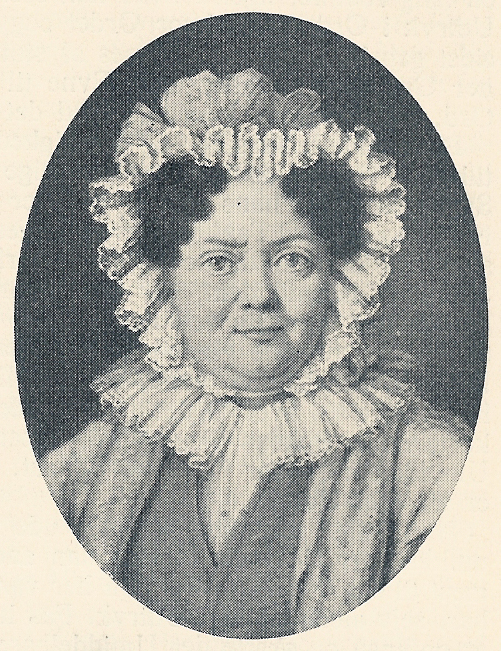
Ane Sørensdatter Lund

Peter Tudvad’s new book The Curse (Politiken, 2013) is a “masterpiece,” according to the reviews in the Danish papers. The Curse is partly fact and partly fiction, but Bo Bjørnvig writes in Weekendavisen that Tudvad, being “the meticulous scholar” he is, sticks as closely to the facts as possible until the very end of the book (Weekendavisen, 19 April 2013).

With the exception of the end, that is, The end is where the fictional elements come in. But why introduce fictional elements? Why not just keep the book a straightforward biography? Tudvad’s answer, according to Karen Syberg’s review in Information, is that “being the ‘archive rat’ that he is, [Tudvad] discovered over time where the sources were silent and hence conceived a desire to transcend the limitations of traditional biographical scholarship by making them speak” (Information, 18 April 2013).

Though the reviewers are unqualified in their praise of the first part of the book, not all are equally happy with the fictional denouement (several were even unprofessional enough to reveal its details in their reviews).

I’m not going to spoil the surprise for those of you whose command of Danish is sufficient to allow you to delve into what by all reports is a book well worth the effort it takes to read. I would like, however, to suggest a direction for future speculations concerning the unrecoverable bits of the Kierkegaard family saga. I always found the details of Kierkegaard’s father’s two marriages mysterious. Michael Kierkegaard married the sister of his business partner of many years, Mads Røyen, when he was 38 and she was 37. Michael Kierkegaard must have known Kirstine Nielsdatter for some time before their betrothal. Yet despite the fact that he had been in a position to marry in the sense that he was a successful businessman of a reasonable age for years, he had not proposed to her.

We know nothing of Michael and Kirstine’s feelings for each other. No love letters, if there were any, survive and neither do any accounts of what their daily life together was like. We know only that the first Mrs. Kierkegaard died of pneumonia after less than two years of marriage. We do know something, however, about the nature of Michael Kierkegaard’s second marriage to Søren Kierkegaard’s mother, Ane Sørensdatter Lund. Their union was to all accounts a happy one. The first Kierkegaard union was childless, but the second produced a brood of seven children over which Ane presided with what acquaintances described as pronounced maternal solicitude.

The second Kierkegaard marriage had a somewhat scandalous beginning, not simply because Ane was pregnant at the time of the wedding, and not even because that pregnancy was clearly the result of a liaison that had taken place within an unacceptably short time after the demise of the first Mrs. Kierkegaard, but also because Michael Kierkegaard had drafted a prenuptial agreement that was so unfair to his future second wife that his lawyer refused to sign it.

The precipitous second marriage of the elder Kierkegaard has traditionally been interpreted as a product of the patriarch’s lechery. There is little evidence of this purported lechery, however, apart from the fact of Ane’s pregnancy. That is, there’s no evidence that Michael Kierkegaard had any extramarital liaisons either before, during, or after either of his two marriages. No claimants to the Kierkegaard fortune were produced by women of apparently easy virtue. That is, the elder Kierkegaard does not appear to have been a man of unbridled lusts.

Ane Sørensdatter Lund was from central Jutland, just as was Michael Kierkegaard and both were from similar rural backgrounds. Hence they had something in common that Michael Kierkegaard did not have with his first wife. Perhaps the Kierkegaard family “curse” played itself out in Michael Kierkegaard’s actually falling in love with a woman who would have been considered an unsuitable mate. Ane was to all accounts no great beauty, but the surviving portrait of her depicts a woman with a vivacious expression and a keen, penetrating gaze. It’s not hard to imagine that Michael could have found her attractive, as indeed, history confirms that he did. And if she wasn’t a great beauty, it’s well known that true love often has little to do with prevailing standards of physical attractiveness.

Perhaps Michael Kierkegaard actually married his first wife partly for her generous dowry, but also in order to be closer to Ane. Ane had been in the employ of Mads Røyen until the elder Kierkegaard’s marriage to Kirstine, at which point she went to work for the new couple. By the time of his marriage, Michael Kierkegaard’s social position had risen to the point that marriage to a servant would have been considered inappropriate. And for the wealthy Kierkegaard to pass over the sister of his business partner in favor of one of the latter’s household servants would likely have been considered a positive affront to the Røyen clan. Michael Kierkegaard, whose business acumen is well documented, would certainly have wanted to avoid flouting social convention in a way that might have had negative financial repercussions. How much easier it would have been to consolidate a business alliance through marriage to Kirstine while at the same time arranging that the real object of his affections would become part of his new household.

Scholars have apparently been put off the scent of such speculations by the horrific prenuptial agreement. Why would the elder Kierkegaard have drawn up such an offensive document? He cannot have been unaware of how it would be received. He cannot have been unaware that to offer such terms to the woman one was about to marry would have been considered completely socially unacceptable. Why would the ordinarily shrewd man have done such a thing? It seems more a theatrical gesture than a serious attempt to craft a legally binding document.

My guess, and I offer this in all seriousness, is that it was done deliberately to conceal the true nature of the coming alliance. The whole thing is too reminiscent of the protestations of young boys that they “hate” the little girls upon whom they secretly harbor crushes. Was Michael Kierkegaard trying to convince himself that he’d been seduced by the to all accounts hitherto innocent Ane? That seems not only singularly unchivalrous, but also at odds with his penchant for psychological self flagellation.

What seems more probable is that he hoped the wording of the notorious document would get out, as indeed it did, and that it would lend support to the view that the elder Kierkegaard had not  married Ane out of love, but had been dragged kicking and screaming to the altar. Again, this is a singularly unchivalrous impression to try to create, but one that is explicable if the point was to conceal a genuine affection that would have had far more negative repercussions if anyone actually suspected it. One sexual indiscretion, after all, would be infinitely more forgivable than marrying a woman one didn’t love because of financial expediency, while at the same time scheming to be with the woman one really did love. And if the former died a short time after the marriage, suspicion would inevitably surface that one may, in fact, have been responsible for the first wife’s precipitous end.

If these speculations are correct, Michael Kierkegaard wouldn’t have had to murder his first wife in order to have been racked with guilt over the circumstances of his marriages and for the stain of that guilt to have spread itself over the otherwise happy Kierkegaard household, as indeed the stain of some sort of guilt clearly did.

Did Kirstine Nielsdatter die of a broken heart after learning of her husband’s affection for another woman (and one of lowly station to boot)? Or did she just die, as people were more wont to do then than now? Who knows. Still, the details of Michael Kierkegaard’s two marriages are strange and the speculations presented above make sense of them in a way that is not too fantastical and that hence does not overstrain credulity. In fact, these speculations seem to me to make more sense of those details than does their face value. It’s surprising, in fact, this face value has been so uncritically accepted by scholars.

The Curse!

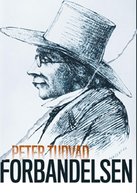
1586255t137Peter Tudvad is has yet another book on Kierkegaard scheduled to appear this coming Tuesday, April 16th, 2013. I’d been hoping  his next book would be a biography. This book isn’t a biography though, it’s a biographical novel entitled Forbandelsen (i.e., the curse). The blurb on the back of the book says that it’s a

“dramatic portrayal of [the life of] Søren Kierkegaard, the brilliant, and at times mad, intellectual giant who revolutionized philosophy and shook theology with his emphasis on ‘the individual’ and ‘discipleship.’

“In the tradition of Dostojevski and Kafka, The Curse situates the protagonist in a universe where crime and punishment, sin and grace shift continuously between actuality and illusion, so that the reader is pulled into Kierkegaard’s thoughts and takes part in his existential battle with both God and humanity.

“The Curse is thus a theological novel and precisely as such provides a psychological portrait of a man who, with tragic pathos, sets heaven and earth in motion in an attempt to find a truth for which he can live and die.

“Kierkegaard’s antagonists, Bishop Mynster and Professor Martensen, his unhappy love, Regine, his brother Peter and friend Emil, along with many other figures, all appear in this grand story of piety and perversion, of death and perjury, of the Church’s distortion of the Gospels–and of a shepherd boy’s fateful cursing of God”

The book, from Tudvad’s usual publisher Politiken, is 494 pages and costs 350 kroner (that’s about $60). It hasn’t been reviewed yet, but I’ll fill you in on the reviews when they begin to appear. In the meantime, if you would like a little “smagsprøve,” as the Danes say, of the book you can actually print out an entire chapter (unfortunately, not the first chapter) here.

Rumor has it that Joakim Garff also has a book scheduled to appear soon. This will be the first book Garff has published since his biography of Kierkegaard back in 2000. You can bet he hasn’t been idle though, my sources say he has been laboring diligently and that this book is only one of several projects he has in the works.