Page 2 of 20

Ad Fontes: Kierkegaard and MacDonald on “Original Christianity”

This year is the bicentenary of the birth of George MacDonald. There were a number of conferences held to celebrate this auspicious event. I was fortunate to be able to attend two of them. I wrote earlier about the first conference that took place at Wheaton College last summer. This post is about a conference that took place at Yale University on the 13th and 14th of December. 

I discovered by accident that Yale’s Beinecke Rare Book and Manuscript Library has the largest collection of MacDonal materials of any library in the world. That knowledge encouraged in me the hope that Yale might be willing to host a conference on MacDonald, so I “cold-called” several members of the faculty at Yale to see if there was any possibility that my hope might be realized. I didn’t have to wait long, David Mahan, of Yale’s Institute of Sacred Music responded almost immediately that the ISM could provide us with a venu. He couldn’t promise any financial support, however, so I turned to Drexel in the hope that they might be willing to provide the money we needed. They did! 

Drexel, or more specifically, David Brown, dean of Drexel’s College of Arts and Sciences, and former Drexel President John Fry, very generously agreed to cover all the costs associated with the conference. That promise was absolutely crucial in making the conference the success that it was because quite a few of the speakers could not count on institutional support to cover their costs. I will forever be indebted to Drexel for their generosity in what are hard times for pretty much every institution of higher education.

The conference was absolutely wonderful. We were treated to a tour of some of the MacDonald materials in the library, and encouraged to apply for the numerous fellowships the library has to support scholars doing research on their collections. There was a truly impressive list of presenters, as well, including Malcolm Guite and Kirstin Jeffrey Johnson, president and co-chair respectively of the George MacDonald Society, Julie Canlis, Kerry Magrudder, Trevor Hart, and many more. A full list of speakers can be found on the program

As I’ve mentioned before on this blog, there are lots of similarities between Kierkegaard’s and MacDonald’s thought. Mine was the only paper, however, comparing the two. There is talk of all the papers presented in celebration of MacDonald’s bicentenary being published, so I won’t give you the whole paper here. The paper, “Ad Fontes: Kierkegaard and MacDonald on ‘Original Christianity,’” argues that “Kierkegaard and MacDonald share a reverence for the original Christian texts and a healthy skepticism for the official Christian tradition and its tendency to lapse into dogmatism and authoritarianism, that was unusual both for their own time and for ours and that this reverence and skepticism reveals a deep affinity in their thought concerning the true message of Christianity and the nature of Christian life.” Both Kierkegaard and MacDonald, I observe in the paper, had extensive knowledge of ancient Greek and used this knowledge to correct what they felt to be errors in the interpretation of the Christian message. Again, I’m not going to present my entire argument here. I will, however, give you a little taste of the nature of my argument. The paper begins…

Ad fontes, or “to the sources,was one of the rallying cries of the Protestant Reformation. It appears in Psalm 41 of the Latin Vulgate (Psalm 42 in most other versions), which reads “As the hart panteth after the water brooks,(desiderat cervus ad fontes aquarum) so panteth my soul after thee, O God.” 

The sources, or fonts, as we say in English, of Christian faith are first and foremost the earliest Christian writings, and to access these requires considerable knowledge of ancient Greek. It is not merely the earliest manuscripts of the New Testament that were written in Greek, but also the works of the earliest of the Church Fathers.”

The paper gives a number of example where both Kierkegaard and MacDonald use their knowledge of ancient Greek to defend their own interpretations of the true message of Christianity. The paper, as a whole, is yet another argument in support of the view that Kierkegaard, like MacDonald, was a universalist, and while I didn’t have the space to develop the argument in the detail I would like, I think I made a fairly convincing case, drawing not merely on texts from the works of both thinkers but also on the impressive scholarship of Ilaria Ramelli and David Konstan, whose co-authored book Terms for Eternity: Aiônios and Aïdios in Classical and Christian Texts makes a very compelling argument that there are few if any references to eternal damnation anywhere in the New Testament. This fact has been obscured by church history which, from the period of at least Augustine onward, has arguably systematically misinterpreted the meanings of these terms. Scholars well-versed in ancient Greek, however, as both Kierkegaard and MacDonald were, would certainly have been aware of the paucity of references to eternal damnation in the New Testament as well as of the fact that the church appears to have labored mightily to obscure this. This fact could actually be one of the reasons that both thinkers exhibit such a healthy skepticism for the authority of various thinkers throughout church history. Interesting, eh?

The Yale MacDonald conference was such a success, that we are hoping to be able to make it a regular event every two, or perhaps three years. So there is time for you Kierkegaard scholars to familiarize yourself with MacDonald’s thought before the next conference!
End-of-Year Bits and Pieces

The last few months have been packed with Kierkegaard-related activities. There were not the standard two Kierkegaard sessions at the annual meeting of the American Academy of Religion in San Diego in November, but actually five! You can find a list of the sessions as well as the presenters here.
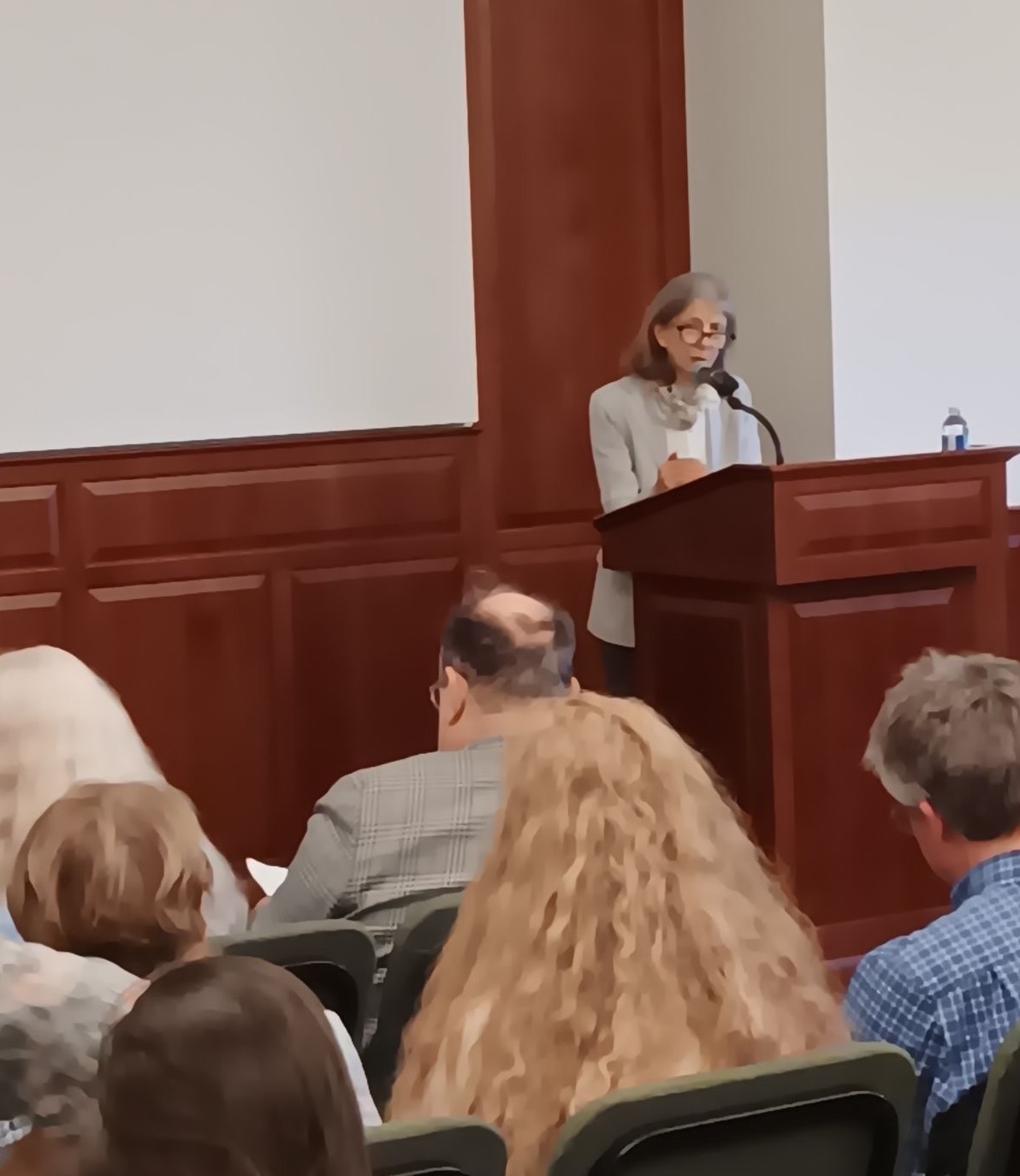
The papers were of varying quality, but none stood out as particularly bad. I realize that that observation is sort of damning with faint praise. Sadly, however, faint praise is often all that is appropriate with respect to contemporary Kierkegaard scholarship. The problem isn’t just that a decent command of Danish is all too rare among Kierkegaard scholars, it’s also that far too many are not familiar with the breadth of Kierkegaard’s writings. Many scholars continue, for example, to view Kierkegaard as sexist simply because they are unfamiliar with the material from Kierkegaard’s journals and papers that I presented in my paper “Kierkegaard on the Paradox of Feminist Progress” as part of a session of the Nineteenth Century Theology Unit and that I have presented here on this blog. 

There are several difficulties here. First, Kierkegaard’s unpublished material collected first in Søren Kierkegaard’s Journals and Papers, and then again in the new Kierkegaard’s Journals and Notebooks, while not complete is still very extensive, so it takes some time to get through it all.

Second is the fact that the short cut of searching for relevant material in the online edition of Kierkegaard’s works is unavailable for scholars who don’t have a very good knowledge of Danish. A little knowledge just isn’t enough because in many instances, there will be literally thousands of hits on a search for a particular term such as Evighed (i.e., “eternity”). There are 149 pages of hits for that term and each page has what appears to be a minimum of ten hits, but which can be greater because each hit will give a number of appearances of the term in question for a particular text. So that’s over a thousand hits for a single term, each of which must be read for its relevance to the topic being researched. One has to be able to scan these hits very quickly to see if they are indeed relevant, and most scholars simply can’t do that. 

Third, as I mentioned above, and have mentioned before, even the new Søren Kierkegaards Skrifter (and the new Kierkegaard’s Journals and Notebooks, which is based on the Skrifter) while purporting to be complete, is not actually complete. Some very important material is missing. That material can be accessed only in the old Søren Kierkegaards Papirer. Very few people have a set of the Papirer, though. I did a search just now for a set and couldn’t find a complete one, though I did find this set that has 19 volumes. The listing says that the complete set is actually 20 volumes. My own hard-cover set actually has 25 volumes, though. Three of those volumes are indexes, but that means that a complete set, sans the indexes would be 22 volumes and not 20. 

But enough of the problems with contemporary Kierkegaard scholarship. There is other news, both good and bad, to report. The good news first: The Kierkegaard Library at St. Olaf College is doing its best to improve the quality of Kierkegaard studies. First, they offer courses in Danish during the summer for visiting scholars and will be offering one on translation as well in the summer of 2026. Second, they have launched a new journal dedicated to Kierkegaard scholarship.

Finally, the bad news. Robert Alastair Hannay passed away on the eighth of December. Hannay was an outstanding Kierkegaard scholar, though perhaps not always so sensitive to the depth and influence of Kierkegaard’s religious convictions on his thought more generally. He was rare among Kierkegaard scholars in having had a rigorous analytical training in philosophy and he put that training to good use in his scholarship. He was also an outstanding translator. His translations of Kierkegaard’s works for Penguin are unsurpassed in both their accuracy and readability. Hannay will be sorely missed. 

Translation Recommendations

image000002

I have just returned from a wonderful conference at Wheaton College on the thought of George MacDonald (photo at left, courtesy of Ben White). I’ve mentioned in earlier posts how close MacDonald’s thinking is in many respects to Kierkegaard’s. Despite this, however, his thought seems virtually unknown to Kierkegaard scholars, so I was pleasantly surprised to see that mine was not the only paper on MacDonald and Kierkegaard, Mark Lama presented a paper entitled “Hearing the Raven Croak: Lilith, Kierkegaard, & Selfhood.” I enjoyed the paper very much, though I’d have enjoyed it more, I’m sure, if I had read MacDonald’s novel, Lilith.

Lama’s paper led me to the discovery of yet another problem with the Hongs’ translation of The Sickness Unto Death. Lama quoted from Hannay’s translation of that work for Penguin. Hannay has: 

This then is the formula which describes the state of the self when despair is completely eradicated: in relating to itself and in wanting to be itself, the self is grounded transparently in the power that established it. (p. 48).

Where the Hongs have:

The formula that describes the state of the self when despair is completely rooted out is this: in relating itself to itself and in willing to be itself, the self rests transparently in the power that established it. (p. 14).

The Danish, however, is:

Dette er nemlig Formelen, som beskriver Selvets Tilstand, naar Fortvivlelsen ganske er udryddet: i at forholde sig til sig selv, og i at ville være sig selv grunder Selvet gjennemsigtigt i den Magt, som satte det (SKS 11, 130).

I actually preferred the Hong’s “rests” from a stylistic point of view. Unfortunately, I have to confess that Hannay’s “grounded” is better, given that the Danish in question is “grunder” and not “hviler.” My guess is that Kierkegaard chose the former because it fit better the somewhat scholarly tone of the book.

I shouldn’t be surprised that Hannay’s translation is, in this instance, superior to the Hongs’ Hannay’s translations (with the exception of his translation of the Postscript) are generally superior to the Hongs’. 

I was discussing this recently with Andrew Davison, until recently Professor of Theology and Natural Sciences, at the University of Cambridge (and sometime priest at S. Clement’s here in Philadelphia) and now Canon and Regius Professor of Divinity at Christ Church, Oxford. Davison suggested that I should do a blog post where I identified which of the many English translations of Kierkegaard I thought were the best. I do sometimes get emails from people who want me to recommend translations for them, so it seems like a blog post that does that would be a good idea. Take these recommendations with a grain of salt, though, because I have not made studious comparisons of all the English translations of Kierkegaard. And remember, no translation can serve as a foundation for serious scholarship. 

In general, I would say that the best translations of Kierkegaard are the older ones by David Swenson and Walter Lowrie. They are still widely available in used bookstores and on abebooks.com. Alastair Hannay’s translations for Penguin are also very good. Under no circumstances, however, should you use the translation of the Postcript that Hannay did for Princeton. Something went horribly wrong with that translation as I detailed in earlier posts on this blog. There are assorted other translations of various works of Kierkegaard. George Pattison has a couple, I believe, as does Bruce Kirmmse. But while Kirmmse has an excellent knowledge of Danish, neither Pattison nor Kirmmse is a writer of sufficient eloquence, I believe, to do Kierkegaard’s prose justice. 

I have a handful of translations by other people that I have not yet read. Among those are Stephen Crites’ translation Crisis in the Life of an Actress, and other essays on drama (Harper Torchbook, 1967), A.S. Aldworth and W.S. Ferrie’s translation Consider the Lilies (London: C.W. Daniel Company, Ltd, 1940), Alexander Dru’s The Journals of Kierkegaard (Harper Torchbook, 1958), and The Present Age and Of the Difference Between a Genius and an Apostle (Harper Torchbook, 1962), and an intriguing The Diary of Søren Kierkegaard, translated by Gerda M.Andersen, and edited by Peter P. Rohde.

I will check out these translations and let you know what I think of them in later posts.