Page 3 of 8

New Book on Kierkegaard and Judaism!

IMG_3176

Some months ago I was contacted by a Swiss scholar, Joanna Nowotny, who wished to thank me for the work I do on this blog. She’d made extensive use of it, she explained, when doing the research for her book, »Kierkegaard ist ein Jude!« Jüdische Kierkegaard-Lektüren in Literatur und Philosophie (“Kierkegaard is a Jew!” readings of Kierkegaard in Jewish literature and philosophy) (Wallstein Verlag, 2018). At some point, when I have the time to construct a “Testimonials” page for this blog, I’ll post her lovely email to it. In the meantime, however, I procured a copy of the book and have begun reading it.

I was intrigued, of course, because most of the recent discussions of Kierkegaard and Judaism with which I am familiar have been connected with Peter Tudvad’s groundbreaking Stadier på antisemitismens vej, Søren Kierkegaard og Jøderne (Stages on the way of anti-Semitism, Søren Kierkegaard and the Jews) (Rosinante, 2010) which reveals that Kierkegaard had some truly reprehensible attitudes toward Jews and Judaism, particularly toward the end of his life. That doesn’t mean, however, that Kierkegaard has nothing positive to contribute to the Jewish intellectual tradition. George Connell argues, in fact, in his excellent Kierkegaard and the Paradox of Religious Pluralism (Eerdmans, 2016) that “[i]ronically, in [Kierkegaard’s] final years, just when his rhetoric is most negative about Jews, just when he most offensively asserts the utter opposition of Judaism and Christianity, the substance of his thought represents a reaffirmation of Christianity’s fundamental and positive relation to Judaism” (p. 66).

I’ve only just started Nowotny’s book and I haven’t gotten very far yet, so I will hold off making any substantive comments on it until later, after I have finished it. In the meantime, I have taken the liberty of translating the copy from the back cover of the book. This will give you a little taste of what the book is about.

This large-scale study by Joanna Nowotny examines the traces left by Kierkegaard’s writing and thinking in the theoretical discourse and literary culture of Jewish Modernism.

“Kierkegaard is a Jew!” Gershom Scholem noted enthusiastically in his diary in 1915. “Nowhere” is the “core of Jewish sensibility [Weltgefühl] … so experientially formulated,” as in Kierkegaard, writes Max Brod a few years later in “Heidentum — Christentum — Judentum” (Paganism, Christianity, Judaism) (in Der Jude 1, 16-20). Such interpretations of the “Christian author” Kierkegaard are remarkable. They raise the question of how Kierkegaard’s œuvre, which was enormously popular in German-speaking Europe after 1900, offered possibilities for a Jewish interpretation and appropriation in particular. How is Kierkegaard’s thinking in this context made theologically, politically, and literarily fruitful, by poets and thinkers such as Martin Buber, Franz Rosenzweig and Franz Kafka? Which aspects of his work play a special role? What attitudes [Gestus] underlie the various Kierkegaard appropriations and which functions do they fulfill in the context of discourses on Jewish identity? Joanna Nowotny addresses these questions in her study and shows the traces Kierkegaard’s writing and thinking have left on authors such as Martin Buber, Gershom Scholem, Franz Werfel, and Franz Kafka.

Looks interesting, eh!
The Biblical Foundations of Kierkegaard’s Monarchism

There’s been much discussion recently of Kierkegaard’s political views. There was even a panel on this subject at the most recent annual meeting of the American Academy of Religion. The panel was organized to honor the work of the late Robert L. Perkins, a giant in Kierkegaard scholarship and an early proponent of the view that Kierkegaard’s thought has positive social implications. I was honored to be a part of this panel. My paper was entitled “Kierkegaard’s Apocryphal Politics: Separating the Wheat from the Chaff.” The other participants were John Davenport, whose paper was entitled “The Crowd and Populism: Was Kierkegaard Correct that All Politics is Profane?,” C. Stephen Evans, whose paper was entitled “Kierkegaard on Putting the Modern State in its Place,” George Pattison, whose paper was entitled “Stepping Forward in Character — But onto what Stage? Arendtian on Kierkegaardian Anti-politics,” and Lee Barrett, whose paper was entitled “Can Love Be Political?” There was also a respondent, Christopher Nelson, who did a wonderful job of bringing all the papers together in his response. The papers were excellent and the discussion afterward was enormously stimulating. It was one of the best sessions I have ever been a part of. You don’t have to take my word for that, though, Mercer University Press, for whom Bob Perkins worked for many years as the editor of the International Kierkegaard Commentary series is publishing a volume of the papers.

The occasion of this post is not simply to advertise that volume, but to develop one of the points I made in the paper that will appear there in more detail than I made in the paper itself. It is well known that Kierkegaard was a monarchist. “Government [by] royal power is representative,” he writes in a journal entry from 1847, “and to this extent Christian (monarchy)[.] The dialectic of monarchy is world-historically both well-established and unchanging.”

This is an odd assertion for a thinker who insists on a sharp distinction between what he calls “worldliness” and Christianity. It seems likely that it is an allusion to Romans 13:1-7 where Paul asserts that “[e]veryone must submit to governing authorities. For all authority comes from God and those in positions of authority have been placed there by God” (New Living Translation). That is, Paul appears to be saying that a monarch represents God, however imperfectly, in his or her role of governing a people in that the authority a monarch has over his or her people is analogous to the authority God has over all people.

The qualification “however imperfectly” is important, however, because there is no reason to suppose that Paul thought all “governing authorities” were equally good. The meaning of Romans 13:1-7 is more likely, as David Papineau has argued, that any government is better than no government in that it is a force for order, order without which human flourishing is impossible.

“Even a bad state,” observes Papineau,

is much better than none at all. When the hated regimes of Eastern Europe and South Africa collapsed at the end of the last century, their populations had the good sense to carry on recognizing the existing police, courts, and other state institutions until new constitutional arrangements could be made. By contrast, the misguided disbanding of the defeated Iraqi army and police by the US authorities in 2003 created a vacuum for mob rule, and is viewed by many commentators as the main source of the subsequent chaos in the Middle East. (David Papineau, Knowing the Score [Basic Books, 2017] 58.)

Paul reputedly twice escaped imprisonment, torture, and possibly even death by asserting his Roman citizenship (Acts 16:35-40 and Acts 22:24-29). That is, it was the authority of Roman law that enabled him, in those instances, to escape incarceration and hence to continue his ministry. If these accounts are true, they explain, at least in part, why Paul would have had the view of temporal authority that he did and, I believe, by extension why Kierkegaard would have held a similar view.

The view that temporal authority has a divine source commits neither Paul nor Kierkegaard to the view that all temporal authorities are equally good. But the positive role that almost any authority has in establishing the order necessary for human flourishing makes the respect for authority that each of them had make at least a certain amount of sense.

Kierkegaard as Liberal Theologian

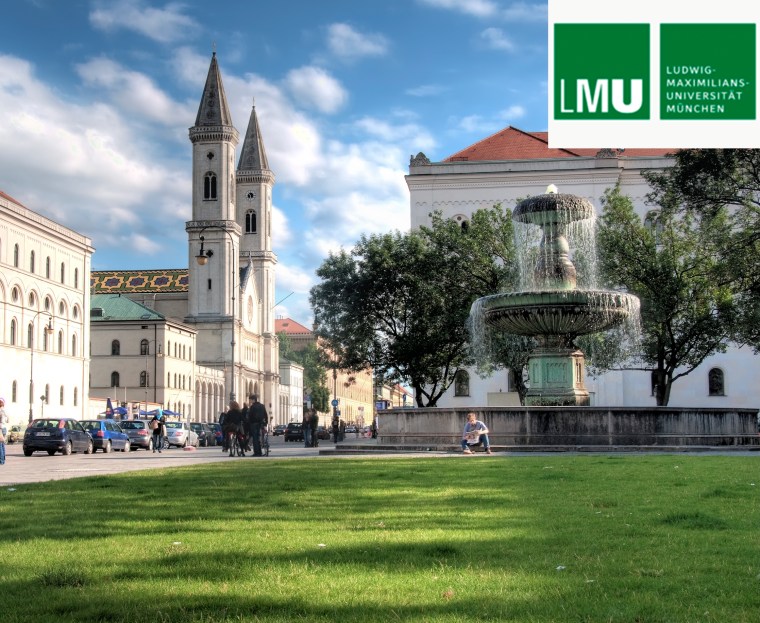
munich-towers

I’m giving a paper at a conference on liberal theology at Ludwig-Maximilians Universität in Munich later this month. I’m a philosopher by training rather than a theologian, so I’ve been doing some reading in preparation for the conference. One of the books I’ve been reading is Michael J. Langford’s A Liberal Theology for the Twenty-First Century. Langford lists, in his introduction, what he asserts are the basic characteristics of liberal theology. The two most fundamental characteristics, according to Langford, are (a) “The desire to use rational methods, including those of the empirical sciences, as far as they can be taken,” (b) The confident “pursuit of truth” from the perspective of belief “in a God who is active in the world, and who is the source of all that is” (22-23).

From these two characteristics, Langford derives five more:

1.) The refusal to be overawed by tradition or authority when strong objections to a belief or a practice are raised.

2.) A dislike of any formal links between church and state.

3.) A general scepticism of claims that are not backed up by appeals to reason or experience.

4.) A tolerant attitude to those who disagree, including an appeal to reason rather than coercion.

5.) A stress on the importance of the individual that rejects the relevance of distinctions based on nationality, race, religion, social standing and gender, except when these things can be shown to be relevant for the issue being considered. Respect for the individual includes encouraging each person to develop their own rationality and their own conscience, rather than being reliant on authority.

Much has traditionally been made of Kierkegaard’s purported conservatism. It struck me, however, as I read through this list, that Kierkegaard’s thought had every single one of these characteristics. Given Kierkegaard’s reputation as an irrationalist, people who are only superficially acquainted with Kierkegaard may be surprised to learn that he had (a) “a desire to use rational methods.” In fact, Kierkegaard prided himself on the rigor of his thought (see, for example, Kierkegaard’s Journals and Notebooks [hereafter: KJN] vol. 7, pp. 182-183), and most specialists know that Kierkegaard was a very rigorous and systematic thinker (see, for example, the preface to C. Stephen Evans’ Passionate Reason, as well as the first chapter of Alastair Hannay’s Kierkegaard in Routledge’s Arguments of the Philosophers series).

Another way Langford describes the second characteristic of liberal theology is that it involves “a conviction that [God] is to be found wherever the human mind can reach” (23). This one is a little trickier because Kierkegaard is adamant that God is never found directly in the world, but only indirectly, when the world is seen through the eyes of faith (see, for example Philosophical Crumbs, 114-116). If we return to Langford, however, we see that such faith is precisely the foundation of the liberal theologian’s pursuit of truth. If seeing God in the world is the end of the liberal theologian’s pursuit of truth, faith that God is to be found there is also his starting point. And that is precisely Kierkegaard’s position. One will never find God, according to Kierkegaard, through, for example, the simple contemplation of nature, but one can find God in nature if one sees nature through the eyes of faith, as his discourse entitled “What We Learn from the Lillies of the Field and From the Birds of the Air” (from Upbuilding Discourses in Various Spirits) makes clear.

Now to the more specific characteristics of liberal theology. Far from being “overawed by tradition or authority,” Kierkegaard is constantly critical of it (c). He criticizes Luther repeatedly (see, for example, KJN vol. 4, pp. 373-375; 410; 427, and The Moment and Late Writings, 39). He even goes so far as to criticize the apostles (see, for example KJN vol. 10, pp. 12, 18, 41, 107). He was vehemently opposed to “any formal links between church and state” (d) as is apparent in his observations that “a State Church is made possible only by deceptively conjuring forth the impression that everyone is Christian” (KJN vol. 9, pp. 331),[1] and “[e]very attempt to establish a Christian state and a Christian people is eo ipso unchristian” (Papir 493 1854; my translation).[2]

Kierkegaard’s “scepticism of claims that are not backed up by appeals to reason or experience” was the foundation of his antipathy for “pure thought” (e), and his definition of faith as “an objective uncertainty held fast in an appropriation process of the most passionate inwardness” (CUP [Swenson-Lowrie], 182) makes clear that faith could never be coerced (f).

Finally, everyone knows that Kierkegaard emphasized the importance of the individual. He may have been personally sexist, racist, and even antisemitic, at least toward the end of his life, but there is nothing in his works that would support the view that we are not all equal in the eyes of God, and equally capable, or incapable, of establishing the proper relation to God through relentless, passionate, conscientious self examination. (I added the qualification “incapable” because establishing the proper relation to God is something, according to Kierkegaard, with respect to which we all need God’s help.)

Kierkegaard was politically conservative not because he lacked sympathy for the common man, and not because he had any particular faith in the social and economic elite. If anything, he had even less faith in the latter than in the former. He believed that elites tended to “to base the state on a substratum of people whom [they] totally ignore[d], denying all kinship with them” (KJN vol. 6, p. 219), and that this was “unchristian and ungodly.”

Kierkegaard was politically conservative because he had an inherent distrust of collectives (a distrust which history appears to vindicate) and because the model of monarchy with which he was most familiar, as I argued earlier, was exceptionally benevolent.

There is no question that Kierkegaard was politically conservative. I hope it is clear now, however, that theologically, he is solidly in the liberal tradition.


[1]. I have altered the translation here because while the text of KJN is not technically incorrect (apart from the fact that “only” is in the wrong position), it is so awkward that it significantly misrepresents the character of the original.

[2]. I’m unable to give the  reference for this quotation because it is in volume 10 and that volume is not yet available in Drexel’s library. I have included a link, however, to the online version of the Danish text.